
Dirt Under Our Nails and Sun on Our Faces: Inside the Spring Planting Party at Burien Best Care Home
The real story behind Burien Best Care Home's spring planting party -- raised cedar garden beds, wheelchair-accessible design, and what a community event at a small adult family home actually looks like.
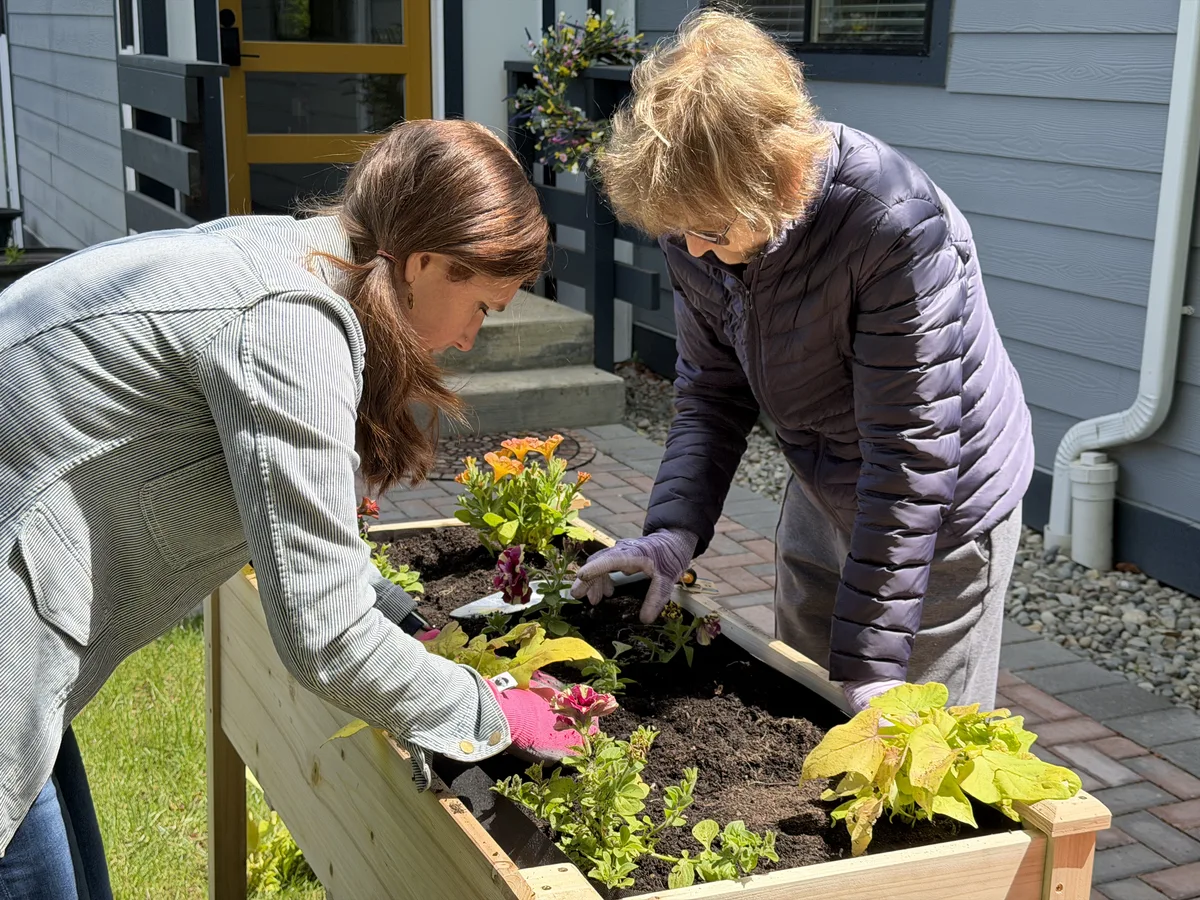
It was a warm May afternoon, the kind of sunny Pacific Northwest day that makes you forget the last four months of gray. The brick patio behind Burien Best Care Home was lined with new raised cedar planting beds, bags of organic soil stacked along the walkway, and flats of petunias and sweet potato vine waiting in the shade.
Our residents were already outside. Some in wheelchairs, some in lawn chairs, all of them watching the preparations with the quiet interest of people who know exactly what a garden is for.
This is the story of our spring planting party. Not the polished version. The real one.
Why Would an Adult Family Home Throw a Planting Party?
Because our residents live here. This is their home. And one of the hardest things about moving into any care setting is the feeling that you have stopped being useful, that the world is happening around you instead of with you.
Gardening gives that back. Not in a therapeutic, clinical sense, although the research on horticultural therapy for older adults is strong. It gives it back in the simple, human sense of putting your hands in dirt and making something grow. Of being needed by a plant that will die if nobody waters it.
We built the raised beds at waist height on purpose. Every bed is accessible from a wheelchair. Nobody has to bend down. Nobody has to kneel. A resident who cannot walk to the mailbox can reach into that bed and plant a petunia with their own two hands.
What Did the Planting Party Actually Look Like?
Messy. Joyful. Slow in the best possible way.
Residents sat at the raised beds with their wheelchairs pulled up to the edge, hands deep in the soil, working alongside staff and family members who had come out for the afternoon. One of our residents, who usually speaks very little, spent twenty minutes carefully arranging petunias by color. Nobody rushed her. Nobody rearranged her work.
A daughter and her mother planted herbs together in the same bed, the daughter following her mother's instructions about spacing even though the spacing did not matter. What mattered was that her mother was giving instructions again.
The garden slowed everyone to the same pace. There was no schedule to keep. No activity to transition to. Just soil, sun, and the sound of people doing something together.
Why Does Gardening Matter for Older Adults?
Gardening engages procedural memory, the body-level memory of how to do things. A resident who cannot remember what day it is may remember exactly how to pat soil around the base of a plant. That kind of memory lives deeper than the parts of the brain that dementia damages first. When you watch someone with advanced memory loss pick up a trowel and start working without being told how, you are watching their body remember what their mind has let go of.
There is a sensory dimension too. The smell of soil and marigolds. The warmth of sun on bare arms. The texture of a leaf between two fingers. For residents who spend most of their time indoors, these are not small things. They are the difference between a day that blurs into the next and a day that feels like it belonged to them.
And then there is the simple beauty of it. A raised bed full of bright petunias outside the window where your parent eats breakfast every morning. That is not decoration. That is dignity.
How Do Raised Garden Beds Help Residents Who Use Wheelchairs?
Traditional garden beds are on the ground. They require bending, kneeling, or crouching, all movements that are impossible or unsafe for many older adults and completely out of reach for anyone in a wheelchair.
Our cedar beds sit at wheelchair-seat height, about 24 inches off the ground, with enough clearance underneath for a wheelchair footrest. A resident can roll up to the bed, reach over the edge, and work in the soil with full arm extension. No assistance required. No adaptive equipment. Just a person and a garden.
That distinction matters more than it might seem. There is a difference between being helped to garden and gardening independently. Our residents are gardening. Their caregivers are nearby if they need anything, but the work is theirs.
What Happens to the Garden After the Party?
The garden is permanent. It did not go away when the last guest drove home.
Staff water the beds daily. The herbs, basil, rosemary, and mint so far, are already being used in the kitchen. Residents walk or wheel out to the beds whenever they want, checking on their plants, pulling a weed, pinching off a dead bloom.
We are already talking about what comes next. Tomatoes in the sunny bed along the south wall. Lavender in the bed near the patio door, where the scent drifts inside on warm afternoons. One resident has been asking about strawberries.
A garden is a project that does not end. That is exactly the point.
What Does a Community Event Tell You About a Care Home?
Quite a lot, actually.
When you are looking at care homes for your parent, look at whether the home does things with residents or to them. A planting party where residents are sitting at the beds, hands in the soil, making decisions about what goes where, is a different kind of event than a planting party where staff put flowers in pots and residents watch from the patio.
A garden is real. It grows. It changes. It needs tending. It is not a photo opportunity. It is not something you can stage for the website and then let die. Six months from now, you will be able to walk up to our patio and see whether those petunias made it. That kind of accountability is built into the dirt.
When you tour any care home, ask what the residents did last week. Not what is on the activity calendar. What actually happened. The answer will tell you everything you need to know.
View all photos from the Spring Planting Party
If you are a family in Burien, Des Moines, SeaTac, or south King County exploring care options, we would love to show you around, garden included.
Schedule a Visit to see Burien Best Care Home in person, or Download Our Family Guide to take the key questions with you.
Thinking about a home for your parent?
Come tour our home in Burien. Meet the team. Ask every question on your list. No pressure, no sales pitch.
Schedule a Visit